 Praveen Kumar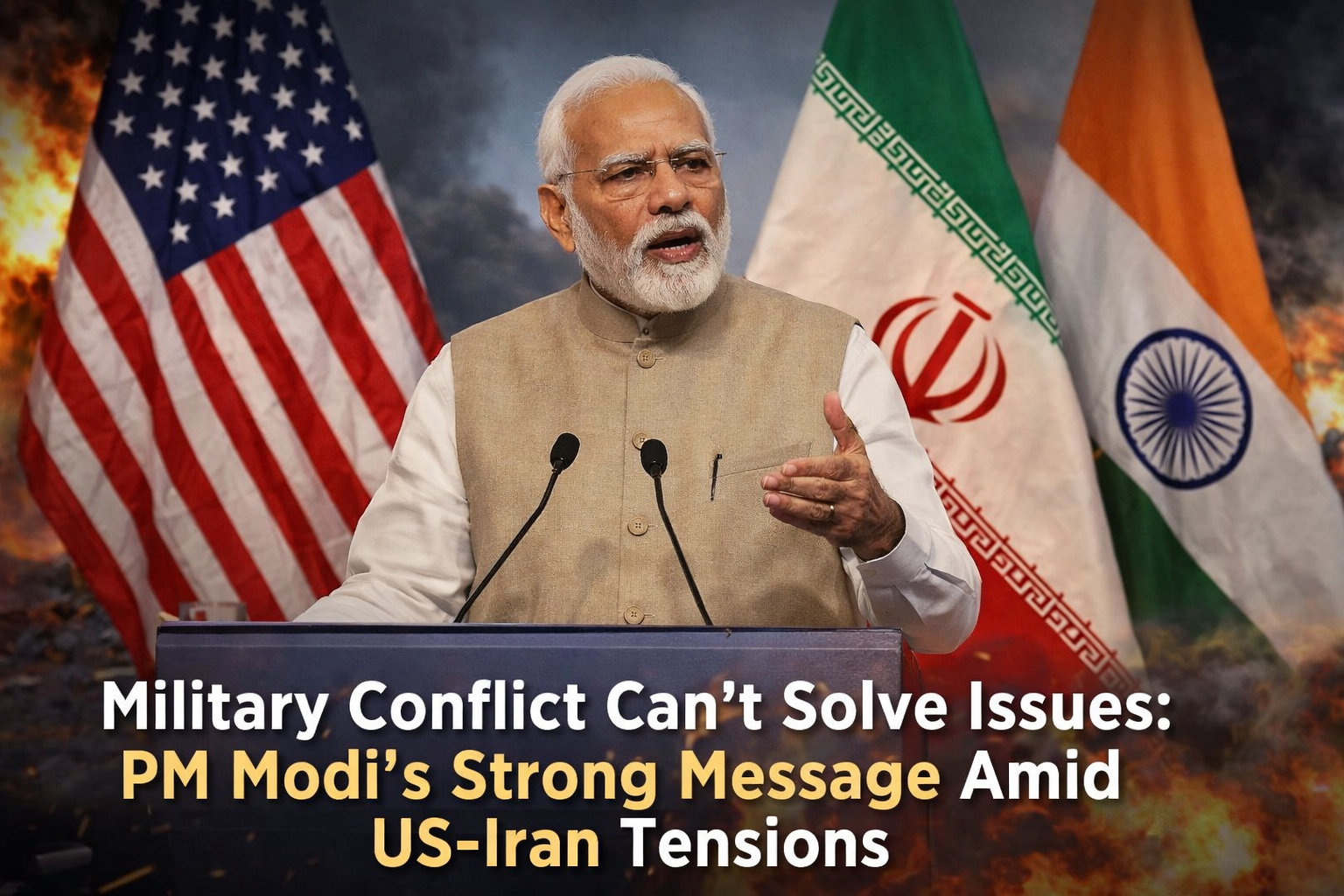
As tensions continue to rise in West Asia due to the ongoing confrontation between the United States and Iran, Prime Minister Narendra Modi delivered a strong message emphasizing that military conflict cannot provide a long-term solution to global problems. His remarks come at a time when geopolitical instability is affecting not only regional peace but also global markets, oil prices, and international diplomacy.
The situation between the US and Iran has escalated in recent weeks following strategic disagreements and regional security concerns. The developments have raised fears of a broader conflict in the Middle East, a region that plays a crucial role in global energy supply and trade routes. Any military escalation in this region could have far-reaching consequences for economies around the world, including India.
Rising Tensions in West Asia
The strained relationship between Washington and Tehran has once again drawn international attention. Military movements, diplomatic warnings, and sharp political statements have intensified uncertainty in the region. Analysts believe that even limited armed confrontation could disrupt oil shipments and create volatility in global financial markets.
For countries like India, which import a significant portion of their crude oil requirements, instability in West Asia can directly impact fuel prices and inflation. Higher oil prices can put pressure on domestic markets, affecting transportation costs, business operations, and overall economic growth.
PM Modi’s Clear Message on Peace
Addressing the situation, Prime Minister Modi underlined that war and military confrontation rarely deliver lasting peace. He stressed the importance of dialogue, diplomacy, and cooperative engagement to resolve disputes between nations. According to him, meaningful communication and mutual understanding remain the most effective tools for ensuring stability.
India has traditionally followed a balanced foreign policy approach, maintaining strong relations with both Western nations and Middle Eastern countries. By advocating restraint and dialogue, India positions itself as a responsible global player that prioritizes peace over aggression.
Economic Impact and Global Concerns
The possibility of conflict has already triggered fluctuations in oil markets and global stock exchanges. Investors tend to react quickly to geopolitical tensions, often shifting funds toward safer assets during uncertain times. Such reactions can create short-term instability in developing markets.
Experts warn that prolonged instability in the region could slow global economic recovery efforts. Supply chain disruptions, increased shipping costs, and investor anxiety may collectively impact international trade.
India, being one of the fastest-growing major economies, has a strategic interest in maintaining global stability. Any sustained rise in crude oil prices could widen the trade deficit and put additional pressure on the rupee.
India’s Role in Promoting Stability
India has consistently supported diplomatic solutions in international conflicts. By maintaining open channels with multiple global powers, the country plays a constructive role in encouraging peaceful negotiations. Prime Minister Modi’s recent statement reinforces India’s commitment to dialogue-based conflict resolution.
As global uncertainties continue, India’s neutral and balanced approach may help in fostering constructive conversations among conflicting parties. The emphasis on cooperation rather than confrontation aligns with India’s broader vision of global peace and economic stability.
Conclusion
In a world increasingly affected by geopolitical tensions, Prime Minister Modi’s message serves as a reminder that military action rarely solves complex international issues. Dialogue, diplomacy, and mutual respect remain essential pillars of lasting peace.
As the situation evolves, global leaders will need to prioritize communication over confrontation. For India, promoting stability and protecting economic interests will remain key priorities amid shifting global dynamics.