
 Praveen Kumar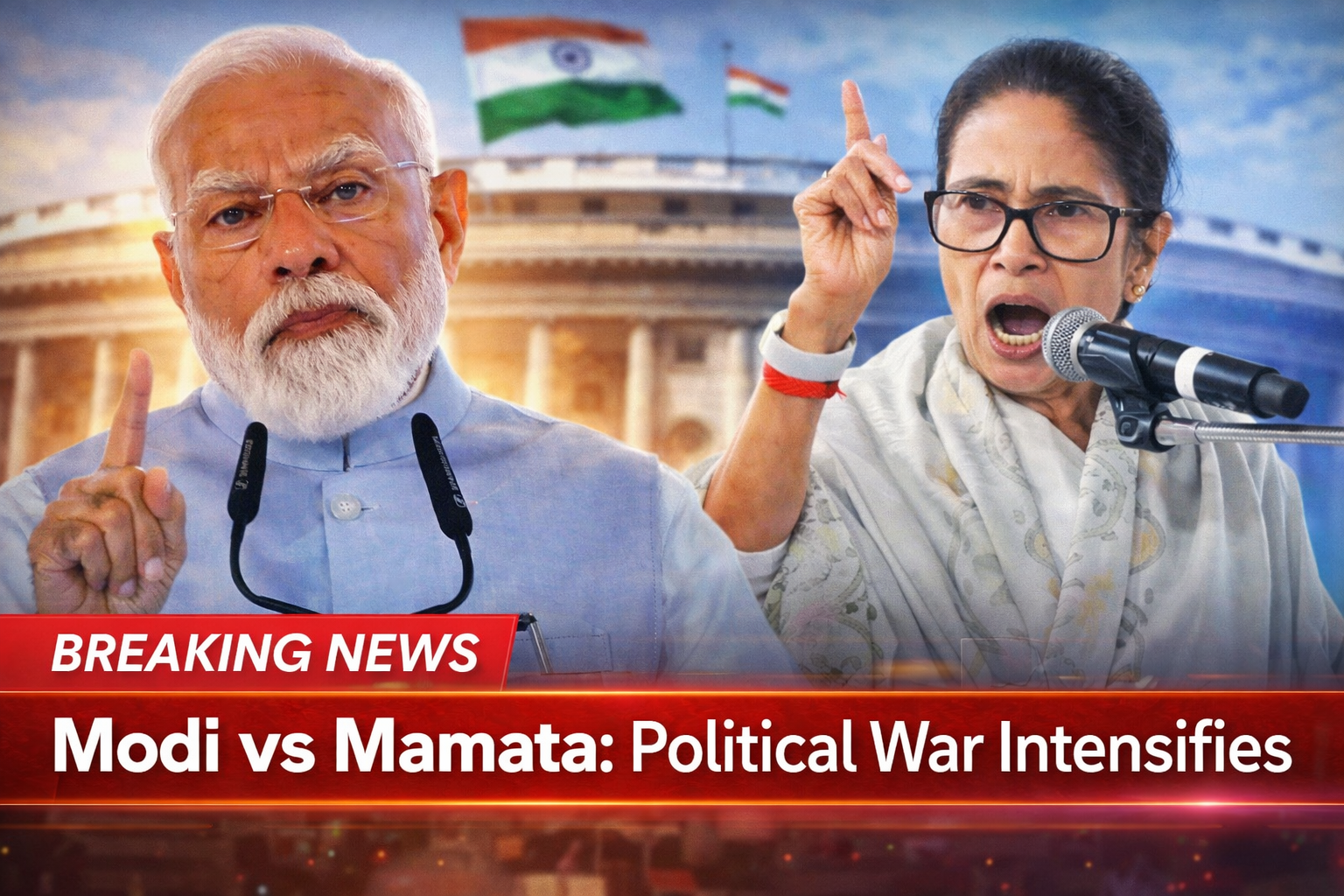
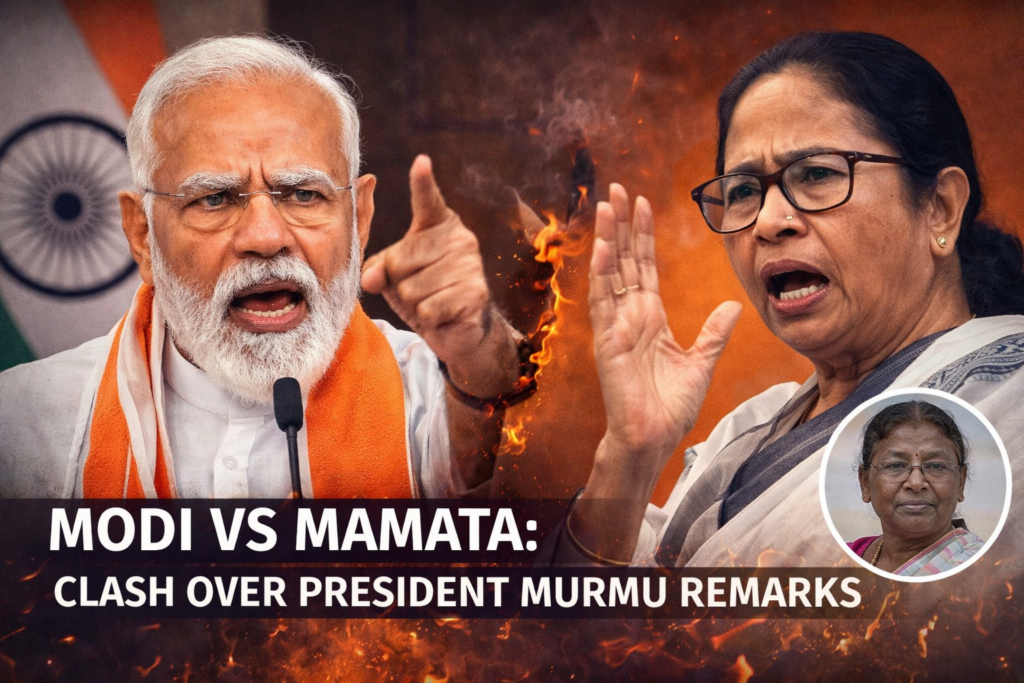
India’s political landscape witnessed another heated exchange after Prime Minister Narendra Modi sharply criticized West Bengal Chief Minister Mamata Banerjee over her remarks related to President Droupadi Murmu. The Prime Minister accused the opposition leader of showing what he described as the “arrogance of power,” stating that such behavior would eventually be rejected by the people.
The controversy has quickly become a major political talking point across the country, with leaders from different parties reacting strongly to the issue. Political analysts say the exchange highlights the growing tension between the central government and the West Bengal administration ahead of upcoming political battles.
Modi’s Strong Response
While addressing a political gathering, Prime Minister Modi criticized the remarks made by Mamata Banerjee regarding President Droupadi Murmu. He stated that disrespect toward constitutional institutions and leaders reflects poorly on the political culture of the country.
According to Modi, India’s democracy is built on respect for its constitutional offices, and any attempt to undermine those institutions is unacceptable. He said that such comments show a sense of political arrogance that, in his words, “will soon be shattered by the power of democracy.”
The Prime Minister further emphasized that the dignity of the President’s office must always be maintained. He urged political leaders to focus on constructive debate rather than personal or controversial remarks.
Mamata Banerjee’s Reaction
West Bengal Chief Minister Mamata Banerjee has been one of the strongest critics of the central government in recent years. Known for her outspoken political style, Banerjee has frequently challenged policies and statements made by the ruling government at the center.
Following the Prime Minister’s criticism, leaders from Banerjee’s party defended her position and accused the ruling party of politicizing the issue. They argued that political disagreements should not be interpreted as disrespect toward constitutional authorities.
Supporters of Banerjee also pointed out that political debates are common in a democracy and that strong criticism between leaders is part of India’s vibrant political system.
Political Reactions Across the Country
The controversy has sparked reactions from several political parties. Leaders from the ruling alliance supported the Prime Minister’s statement, emphasizing the importance of respecting the country’s highest constitutional offices.
On the other hand, opposition parties claimed that the government was trying to create unnecessary controversy to gain political advantage. Some leaders argued that the focus should remain on governance, economic growth, and public welfare instead of political disputes.
Political commentators say such controversies often become major discussion points in Indian politics because they highlight ideological differences between the ruling government and opposition parties.
Role of the President’s Office
The President of India holds one of the most respected positions in the country’s democratic system. The office represents the unity and constitutional authority of the nation.
President Droupadi Murmu, who assumed office in 2022, has often been praised for her historic journey and representation of marginalized communities. As India’s first tribal woman President, her leadership has been seen as a symbol of inclusivity and progress.
Because of the significance of the President’s role, political leaders are generally expected to maintain a respectful tone when referring to the office.
Also read our latest update on political tension in India https://dailyprofitnews.com/iran-israel-war-live/
Impact on National Politics
Experts believe that such exchanges could influence political narratives in the coming months. With elections approaching in several states and political competition intensifying, public statements by major leaders often become part of larger political strategies.
For supporters of the ruling party, the Prime Minister’s remarks reinforce the message of protecting constitutional dignity. For the opposition, the issue may be used to highlight what they see as political targeting by the central government.
Regardless of political positions, the controversy has once again demonstrated how quickly political debates can dominate national headlines in India.
Conclusion
The latest exchange between Prime Minister Narendra Modi and West Bengal Chief Minister Mamata Banerjee reflects the ongoing political rivalry in Indian politics. While both leaders continue to defend their positions, the debate has sparked a nationwide conversation about respect for constitutional offices and the tone of political discourse.
As the situation develops, political observers will closely watch whether the controversy escalates further or eventually fades as another chapter in India’s dynamic democratic politics.
Read full political coverage on https://bbcnews.com